The words dedicated and non-dedicated describe who runs the world and whether the host is also playing. A non-dedicated session is the quickest way to open a local world to friends, but it exists inside the host's game session. A dedicated server is a separate process that can remain online and simulate the world without the owner being logged in as a player.
Neither choice is automatically better. The right answer depends on how often the group plays, whether friends need independent access, how much setup the owner accepts and whether tether or host performance affects the experience. Decide from those constraints before paying for hosting or spending an evening on router configuration.
1. What a non-dedicated session provides
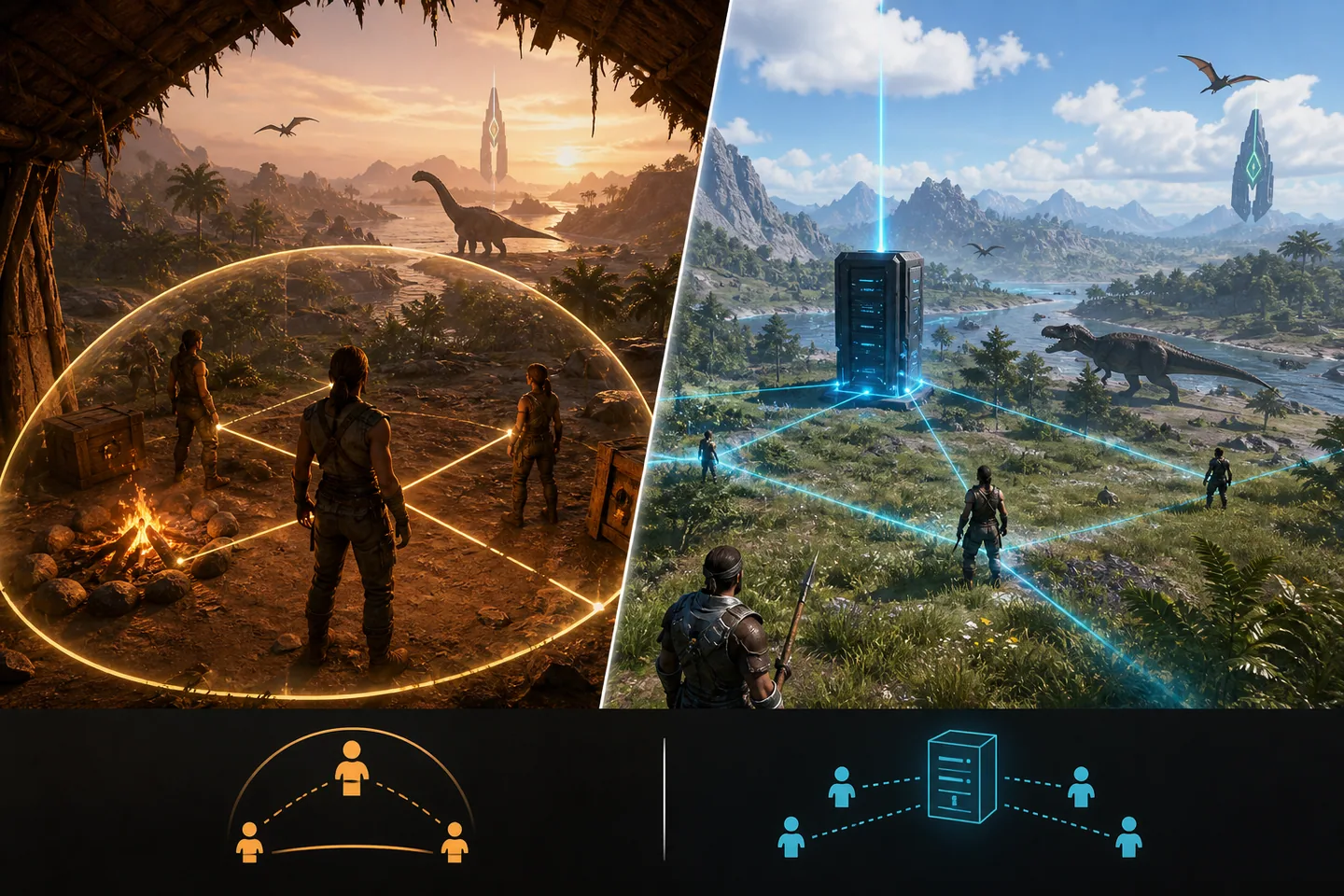
The host opens a single-player-style world and invites or exposes it for multiplayer. Setup is fast because map choice and common settings use the normal host menu. The save stays with the host, and the same machine renders the host's game while simulating the world for everyone. This is practical for a few trusted friends who normally start and stop together.
When the host closes the session, other players cannot continue. Timers that depend on the world running stop with it. Guests may also be constrained by a host-distance barrier or behavior tied to the host session. If a friend expects a permanent server they can join while the owner is at work, non-dedicated does not meet that requirement regardless of the password.
2. What changes with a dedicated server
A dedicated server runs independently from a player client. It can remain online, save on a schedule and accept players whenever the host machine and process are available. Administrators control launch arguments and configuration files, can schedule maintenance and can operate clusters. The host can join as a normal player from a supported client rather than being the center of the session.
The independence creates responsibility. Someone must install updates, manage backups, protect administrator credentials, monitor disk space and troubleshoot networking. Self-hosting uses the owner's hardware and internet connection; rented hosting transfers some infrastructure work to a provider but adds recurring cost and provider-specific controls.
3. Compare performance and availability
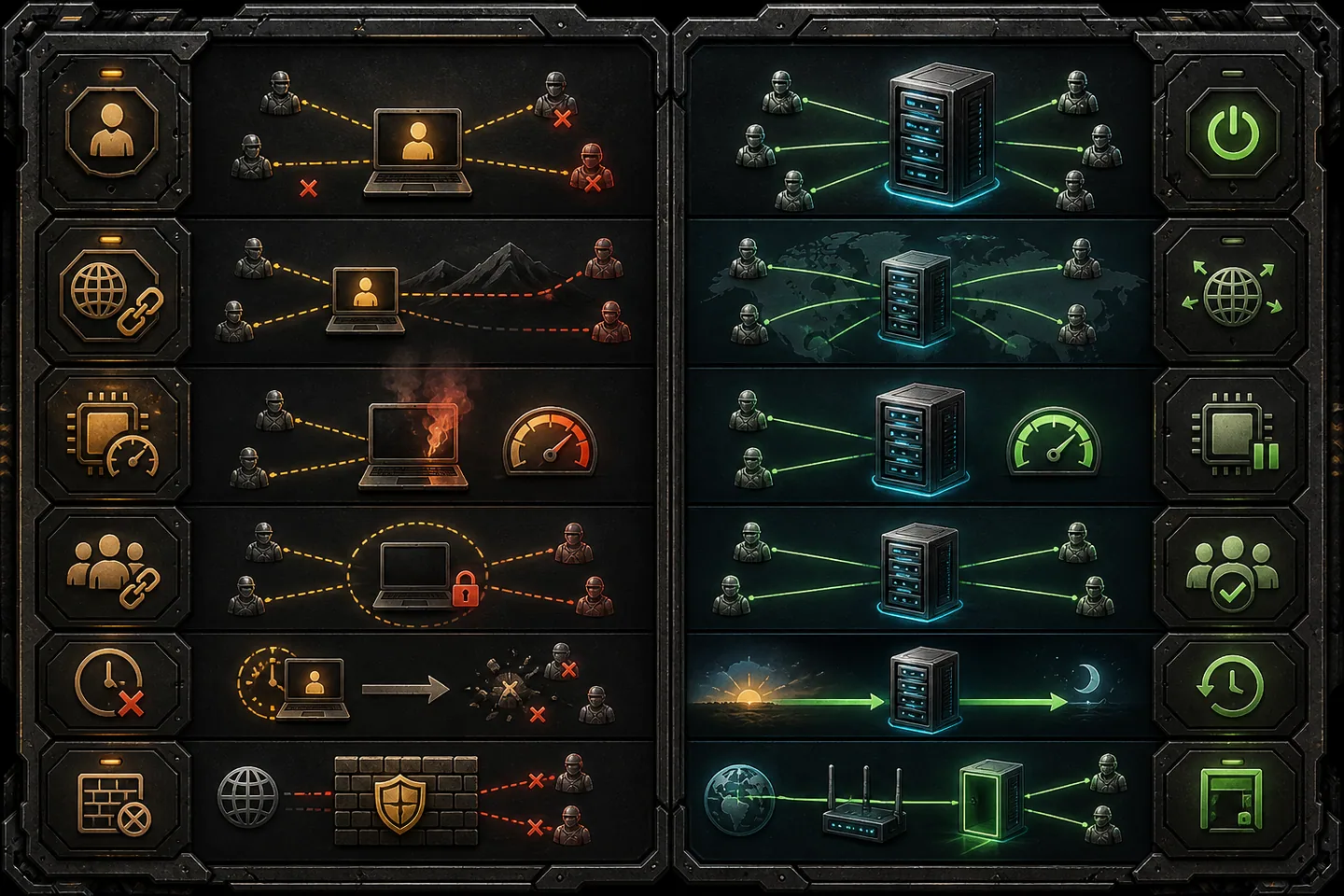
Non-dedicated hosting shares CPU, memory and network resources with the host's rendered game. Performance can change when the host enters a dense base or closes background resources. A dedicated process avoids rendering but still needs enough memory and CPU for creatures, structures, mods and players. Running it on the same gaming PC is possible, though it does not create extra hardware capacity.
Availability is often the deciding factor. If the group has one regular session led by the same person, non-dedicated downtime may not matter. If members live in different time zones, raise babies over long periods or manage a community, an always-running dedicated world offers a fundamentally different experience.
4. Compare settings, mods and recovery
Both modes expose gameplay settings, but dedicated hosting gives direct operational control over files, launch arguments, logs, ports and cluster storage. It is easier to reproduce a known configuration and automate backups. Non-dedicated saves can still be backed up, yet casual hosts often discover their location only after a problem.
Mods add another consideration. A small private session can use supported mods, but the host still controls availability. A dedicated community needs a documented list, tested updates and a recovery copy because mod content can become part of the world. Choose dedicated when repeatability and administration matter more than a quick start button.
5. Compare the real cost
Non-dedicated has no separate hosting bill, but the host must run the game whenever friends play. Self-hosted dedicated service also avoids a rental invoice but consumes electricity, storage, upload capacity and administrator time. A rented server charges monthly while offering an online machine and control panel; backups, performance limits and mod handling vary by provider.
Calculate cost around the group's behavior. Paying for one month may be reasonable for a short story run, while an available spare machine can suit a long private cluster. Do not buy a large plan before measuring the intended map, mod set and player count. Also consider who can restore the world if the one technical owner is unavailable.
6. Use a simple decision checklist
Choose non-dedicated when the same host leads every session, the group accepts host-dependent access and you want the shortest path to playing. Choose dedicated when players require independent access, tethering disrupts play, you need a cluster, or backups and scheduled maintenance must be controlled. Start small and migrate only after preserving a tested copy of the world.
Before inviting friends, explain when the world runs, who owns the save and what happens if the host stops. Many disagreements called server problems are expectation problems. A clear choice now protects dozens of hours of building and breeding later, because everyone understands whether they joined a casual hosted session or a maintained service.
Common questions
Frequently asked questions
Can friends play on a non-dedicated world when the host is offline?
No. The host's game session is the server, so closing it makes the world unavailable.
Does dedicated always mean rented?
No. You can self-host the dedicated process on suitable hardware or rent it from a provider.
Can a non-dedicated world be moved later?
A migration may be possible, but preserve the original save and test player, tribe and structure ownership on a separate server before replacing it.